
Where modal fits in a range
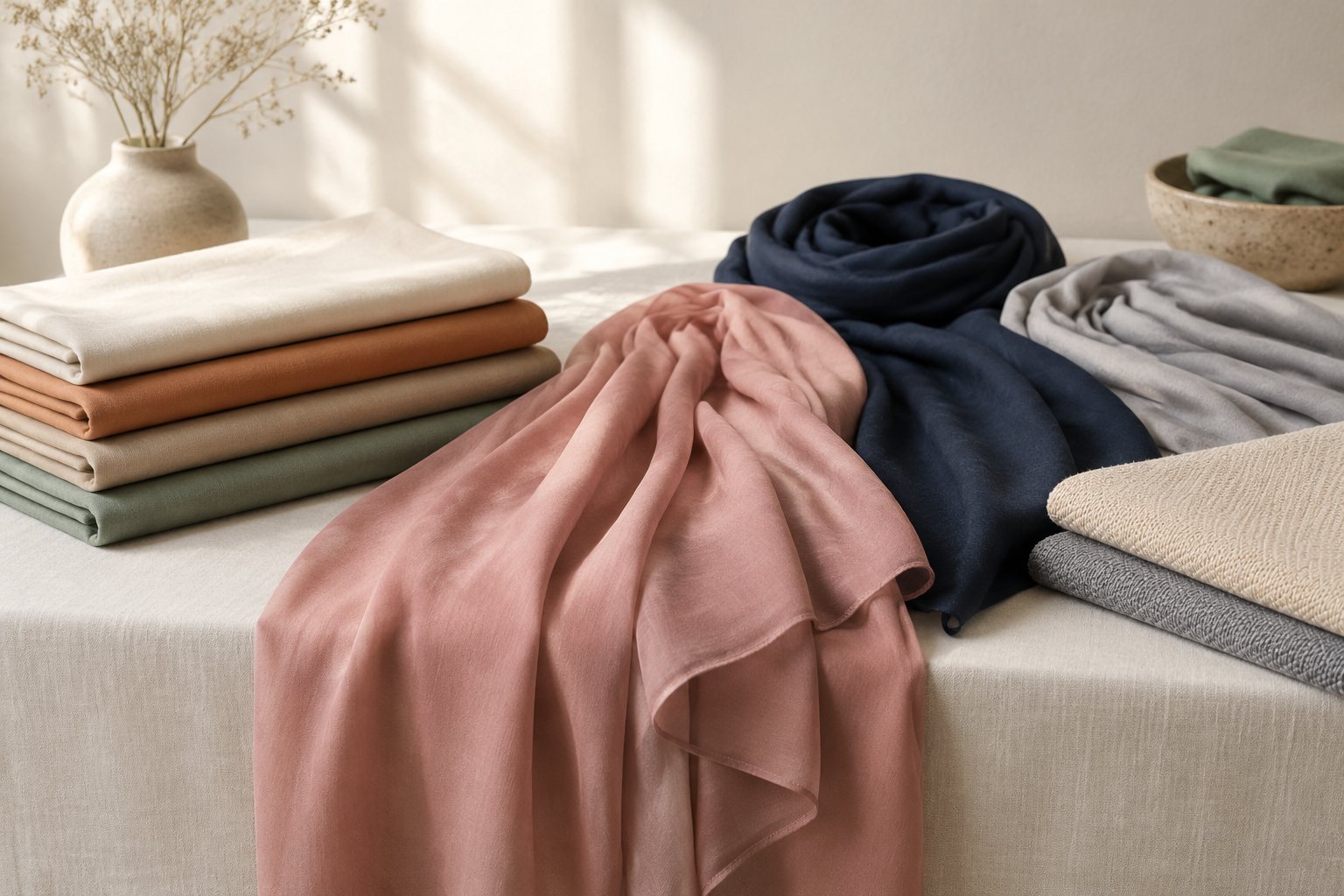
Many brands reach a point where jersey feels too casual and chiffon too dressy. Modal fills the gap. A modal hijab drapes fluidly, feels soft against the skin, breathes well in warm weather and covers better than most chiffons. It is often the fabric that turns a basic range into a premium everyday line, and it is a favorite base for custom prints because colors come out clear and the surface shows detail.
Modal is a regenerated cellulose fiber, made by dissolving plant cellulose and spinning it into a fiber. It belongs to the same broad family as viscose but is processed differently, which usually gives it a little more strength and stability. Modal can be woven into a light, smooth scarf fabric or knit into a soft jersey, and the two behave quite differently.
Woven modal and modal jersey
| Form | Stretch | Drape | Grip | Typical uses |
|---|---|---|---|---|
| Woven modal | Low | Fluid, light | Medium | Printed rectangles and squares |
| Modal jersey | Medium | Soft, follows the shape | High | Instant hijabs, premium everyday rectangles |
| Modal blends | Depends on blend | Depends on blend | Depends on blend | Cost and handle balance; fiber shares on label |
Woven modal is the usual choice for printed rectangles and squares. Modal jersey suits slip-on styles and wraps that need grip. Blends with cotton or other fibers change handle and price, and every fiber and its share goes on the label.
Why modal prints well
Modal absorbs dye readily and has a smooth, even surface, so printed colors come out clean and fine lines hold. Two print methods are common in the cluster. Digital printing suits small runs and designs with many colors or gradients, because there are no screens to make; it is the usual route for a brand testing several designs. Screen printing suits larger runs of a design with fewer colors, where the setup cost is spread across more pieces. Many programs start digital and move a best-selling design to screen later.
Custom prints typically start from about 100 pieces per design, confirmed per fabric and print method. A strike-off, a printed test on the actual modal, is approved before bulk, because the same file can look different on modal, chiffon and cotton. For artwork, repeats and placement, see custom printed hijabs and digital vs screen printed hijabs.
Opacity, weight and drape
Modal is semi-opaque to opaque depending on weight and construction. Lighter woven modal drapes beautifully but may need an underscarf in pale colors; heavier woven modal and modal jersey cover well on their own. We confirm the weight on the spec sheet against the approved sample and check opacity in daylight before approval. If a print includes large pale areas, check opacity on the printed sample rather than on plain fabric, because pale grounds show through more readily.
Shrinkage and care
Cellulose fibers can shrink, and they are weaker when wet. Modal is usually more stable than standard viscose, but a modal hijab still needs a wash test on the approved sample so the washed size is known before bulk. Gentle washing and drying flat suit most modal scarves; the actual care instructions follow the fabric, the print and the finish, and are confirmed per item. For care card wording, see how to wash hijabs by fabric.
Edge finishes
Woven modal is usually finished with a rolled or baby hem for a light edge, or a pressed hem for a slightly crisper look. Modal jersey is usually overlocked. Some printed rectangles carry a printed border that sits inside the hem, which means print placement and hem width must be planned together on the spec sheet. Inspection checks hem width, thread color and print alignment at the edges.
Labels for modal hijabs
In the United States, modal is a recognized generic fiber name, and the label states it with its percentage, alongside any other fibers, the country of origin and the name or RN of the responsible company. Product pages should use the same fiber names as the label. Care instructions follow the care labeling rule where it applies; whether a given scarf is covered is a question for your compliance adviser. If your marketing describes modal by a source or brand of fiber, check that the claim can be documented by the mill.
Modal vs viscose
Buyers often ask whether to choose modal or viscose. Both are regenerated cellulose fibers with soft drape and good breathability. Modal is usually a little stronger and more stable in washing; viscose is widely available, often lower in cost, and the base for popular crinkle styles. For a full comparison read modal vs viscose hijab, and see viscose and crinkle hijabs.
Minimums and timing
For stock modal colors in standard styles, workshops typically start from about 50 to 100 pieces per color. Custom colors are usually higher, set by the dye lot. Custom prints typically start from about 100 pieces per design. Custom samples and strike-offs take about seven working days in published examples, up to around two weeks for new prints, and bulk typically takes about 25 to 35 days after approval, longer ahead of Ramadan and Eid. All are typical reference ranges confirmed in writing for each program.
What to send with a modal brief
- Style and size: rectangle or square, woven or jersey, with the dimensions you want.
- Plain colors by reference, or print artwork with the repeat and any border placement.
- Quantity per color and per design, so minimums can be planned across the range.
- Edge finish, label content, care card and packaging.
- Any reference scarf whose drape or opacity you want to match.
Send artwork and colors through the sample request form. The first reply names a modal construction, a print route and the questions still open.