
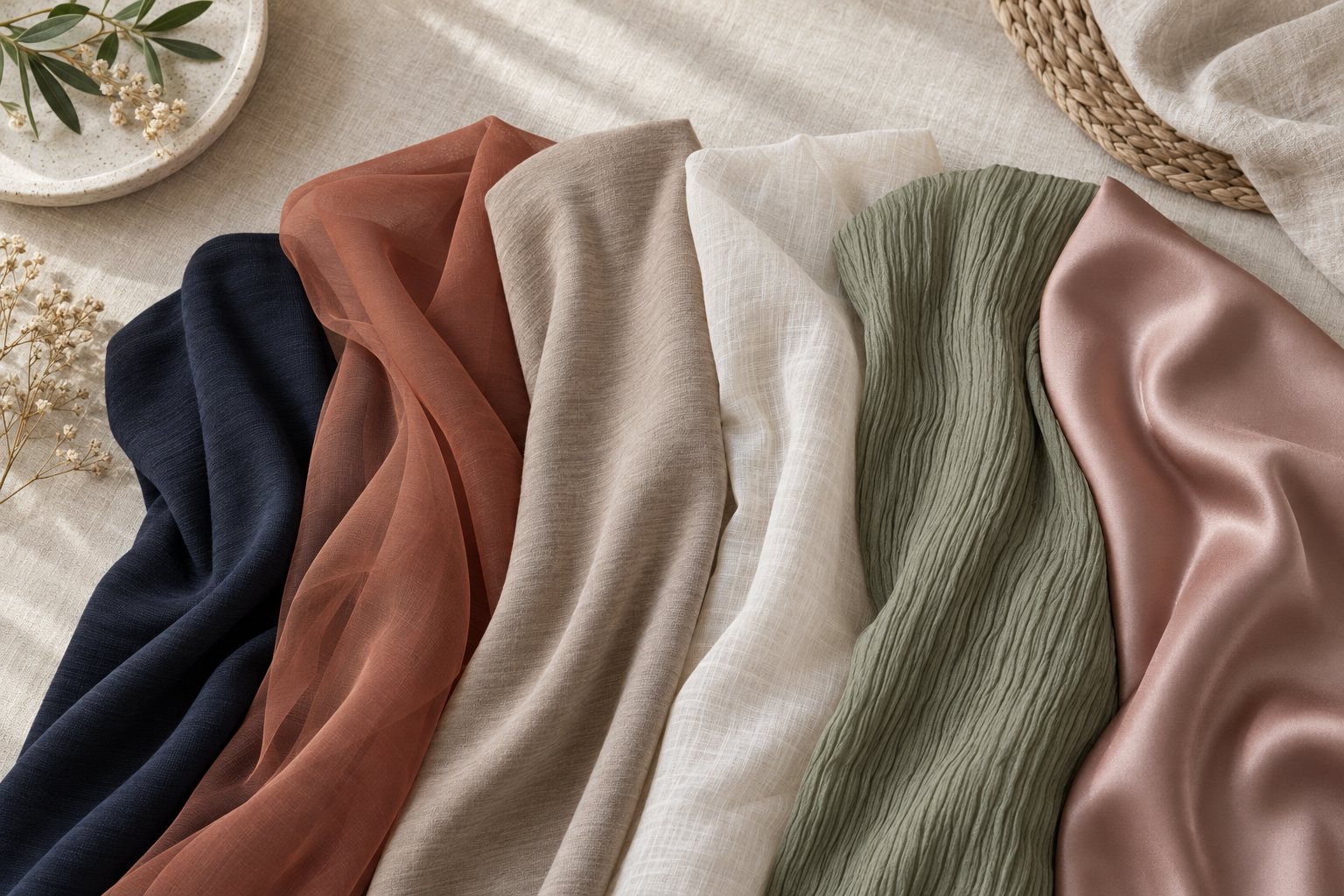
Fabric decides how a hijab behaves
Customers rarely return a hijab because of its color. They return it because it slipped all day, showed through in daylight, creased in the bag or shrank after the first wash. Each of those complaints traces back to fabric: whether it is knit or woven, which fiber it is made from, how heavy it is and how it was finished. Choosing the fabric first, and writing it down precisely, prevents most of them.
This page compares the hijab fabrics we coordinate through partner workshops in the Yiwu scarf cluster. It uses relative words rather than numbers, because stretch, opacity and drape depend on the exact construction and weight of each fabric, and the weight is confirmed on the spec sheet for every program. Each main fabric has its own page with sourcing notes, finishes and the questions to settle before sampling.
The comparison at a glance
| Fabric | Stretch | Opacity | Drape | Grip | Underscarf | Care |
|---|---|---|---|---|---|---|
| Jersey (cotton, viscose, cotton-spandex) | High | Opaque at most weights | Soft, follows the shape | High | Optional | Gentle wash; check shrinkage |
| Chiffon (polyester, crepe chiffon, georgette) | None | Sheer to semi-sheer | Light, floating | Low | Usually | Gentle wash; snags easily |
| Modal | Low woven, medium knit | Semi-opaque to opaque | Fluid | Medium | Depends on weight | Gentle wash; dry flat |
| Cotton voile, lawn, crinkle cotton | None to low | Voile slightly sheer | Light, crisp to soft | Medium | Often, with voile | Easy care; creases |
| Viscose and crinkle viscose | Low | Semi-opaque | Soft, heavy fall | Medium to high | Depends on weight | Gentle; check shrinkage |
| Satin and silk | None | Opaque to semi-sheer | Fluid, with sheen | Low | Usually | Delicate; per care label |
| Bamboo-derived viscose jersey | Medium to high | Opaque at most weights | Soft, fluid | High | Optional | Gentle wash |
| Nida (medina silk) | None | Opaque, matte | Light, matte fall | Medium | Optional | Easy care |
Treat the table as a starting point, not a promise. A heavier chiffon can come close to opaque; a light jersey can show through in strong light. The reliable answer is a sample of the actual fabric at the actual weight, checked in daylight and over a color close to the wearer's hair.
Knits and wovens
Knit fabrics such as jersey are made on circular knitting machines and stretch in at least one direction. They grip the underscarf and hold a wrap with few pins, which is why instant styles, underscarves and sports hijabs are almost always knit. Woven fabrics such as chiffon, voile, satin and nida are made on looms and do not stretch along the grain. They drape, fall and pleat in ways a knit cannot, but they slide more and usually need pins, an underscarf or both. Many ranges carry one of each: a knit for everyday wear and a woven for dressier looks.
The split also matters at the border. Customs classification of scarves usually separates knitted from woven goods, so the construction on the spec sheet should match what is shipped. Classification itself is a question for your customs broker.
Fiber families
Fiber decides how a hijab breathes, how it takes dye and how it must be labeled. Cotton is a natural plant fiber: matte, breathable and easy to care for. Modal and viscose, also called rayon, are regenerated cellulose fibers: soft, fluid and breathable, with a tendency to shrink if the fabric is not pre-treated. Polyester is synthetic; it holds color well, resists creasing and is the base of most chiffon, satin and nida. Silk is a natural protein fiber with a sheen and a delicate hand. Spandex is added in small proportions to jersey for recovery, so the fabric springs back after stretching.
In the United States, fiber content must be stated on the label by generic name and percentage, along with country of origin and the name or RN of the company responsible. Two families need extra care: satin, where silk and polyester satin can look alike, and bamboo, where the fiber is viscose made from bamboo and must be labeled that way.
Fabric by fabric
Jersey
The everyday workhorse. Cotton jersey, viscose jersey and cotton-spandex are soft, stretchy and opaque at most weights, and they stay put with little pinning. Performance jersey is the base for sports hijabs. Read jersey hijabs.
Chiffon
Light, sheer to semi-sheer and slippery, in polyester chiffon, crepe chiffon or georgette. Popular for dressy and layered looks, usually over an underscarf. Light sheer scarves also raise a flammability question. Read chiffon hijabs.
Modal
A regenerated cellulose fiber with a fluid drape and a soft hand, woven or knit. It takes prints well, which makes it a common base for custom designs. Read modal hijabs.
Cotton voile, lawn and crinkle cotton
Breathable and matte, suited to warm weather. Voile is light and slightly sheer; lawn is a little crisper; crinkle cotton adds texture. Read cotton hijabs.
Viscose and crinkle viscose
Soft and breathable with a heavier fall. Crinkle texture helps a wrap grip. Shrinkage and, on sheer weights, flammability need checking. Read viscose and crinkle hijabs.
Satin and silk
Sheen for evening, bridal and Eid ranges, usually paired with an underscarf. Polyester satin and silk are different fibers and must be labeled as what they are. Read satin and silk hijabs.
Bamboo-derived viscose
Usually sold as a soft, premium jersey. Under FTC rules it is labeled as viscose or rayon from bamboo, not as bamboo. It is covered on the viscose page above.
Nida and medina silk
Nida and medina silk are trade names for a matte woven polyester crepe. Despite the name, medina silk is not silk. It is light, opaque and easy to care for, and it is common for niqabs, khimars and prayer sets rather than wrapped hijabs.
Weight, opacity and the spec sheet
Two fabrics with the same name can behave very differently because of weight and construction. A heavier chiffon drapes and covers better but costs more and feels warmer; a lighter jersey breathes but may show through. Rather than quote one number for every program, we write the fabric name, composition, construction and finish on the spec sheet, and the weight is confirmed on the spec sheet against the approved sample. Bulk is then checked against that sample, not against a general description.
Choosing fabrics for a first range
A first range usually needs one grip fabric and one drape fabric. Jersey covers everyday wear and instant styles; modal or chiffon covers dressier looks. Add cotton voile if your customers are in a warm climate, and satin if your calendar includes weddings and Eid. Minimums are counted per color and per fabric, so four colors in two fabrics is usually easier to start than eight colors in one. For stock colors in standard styles, workshops typically start from about 50 to 100 pieces per color, and custom colors are usually higher because they are dyed by lot; every figure is confirmed in writing for each program. For a longer read, see the hijab fabric guide; when you are ready, send your fabric shortlist through the sample request form.