
One word, several garments
Buyers searching for burqas, or burkas, are often looking for different things, because the word is used for different garments in different places. In its best-known sense it describes a garment that covers the whole body and the face, with the face area made of a mesh or grille panel so the wearer can see through it. The Afghan chadari is the garment many people picture: a full-length piece fitted to the head with a cap, falling in pleats, with a mesh panel at the eyes. In some other regions, the same word refers to a face covering rather than a full-length garment.
Because the meanings differ, a product page that says only "burqa" can confuse customers. A clear description of the shape, the length and where the mesh sits does more to help them than the word alone. Wearing practice varies between people, families, communities and regions, and this page describes garments, not choices. Rules on face coverings in public also vary by country and change over time; if your sales channel touches this, take local advice.
Regional forms at a glance
| Form | What it covers | Key construction | Usual fabrics |
|---|---|---|---|
| Full-length garment with mesh (for example the Afghan chadari) | Head, face and body to around the lower leg or ankle | Fitted cap, mesh panel at the eyes, fine pleats from the cap | Light polyester or crepe; weight on the spec sheet |
| Face covering called burqa in some regions | The face, worn with a headscarf | Shaped face piece with ties or a band; construction varies by region | Woven fabrics, varying by region |
| Combined sets sold online as burqas | A headpiece and face piece, sometimes with a long overlayer | Often a khimar-style top with an attached or separate face piece | Nida, crepe, chiffon |
The third row is a retail reality more than a traditional form. Online listings sometimes use burqa for any garment with face coverage, including sets close to a khimar with a niqab. If you sell under the word, describe what is in the bag.
Construction of the full-length form
Cap
The full-length garment hangs from a fitted cap that sits on the crown of the head. The cap sets the fit of the whole garment, so its circumference and depth are measurements on the spec sheet. Caps are usually lined or reinforced so they hold shape under the weight of the fabric.
Mesh panel
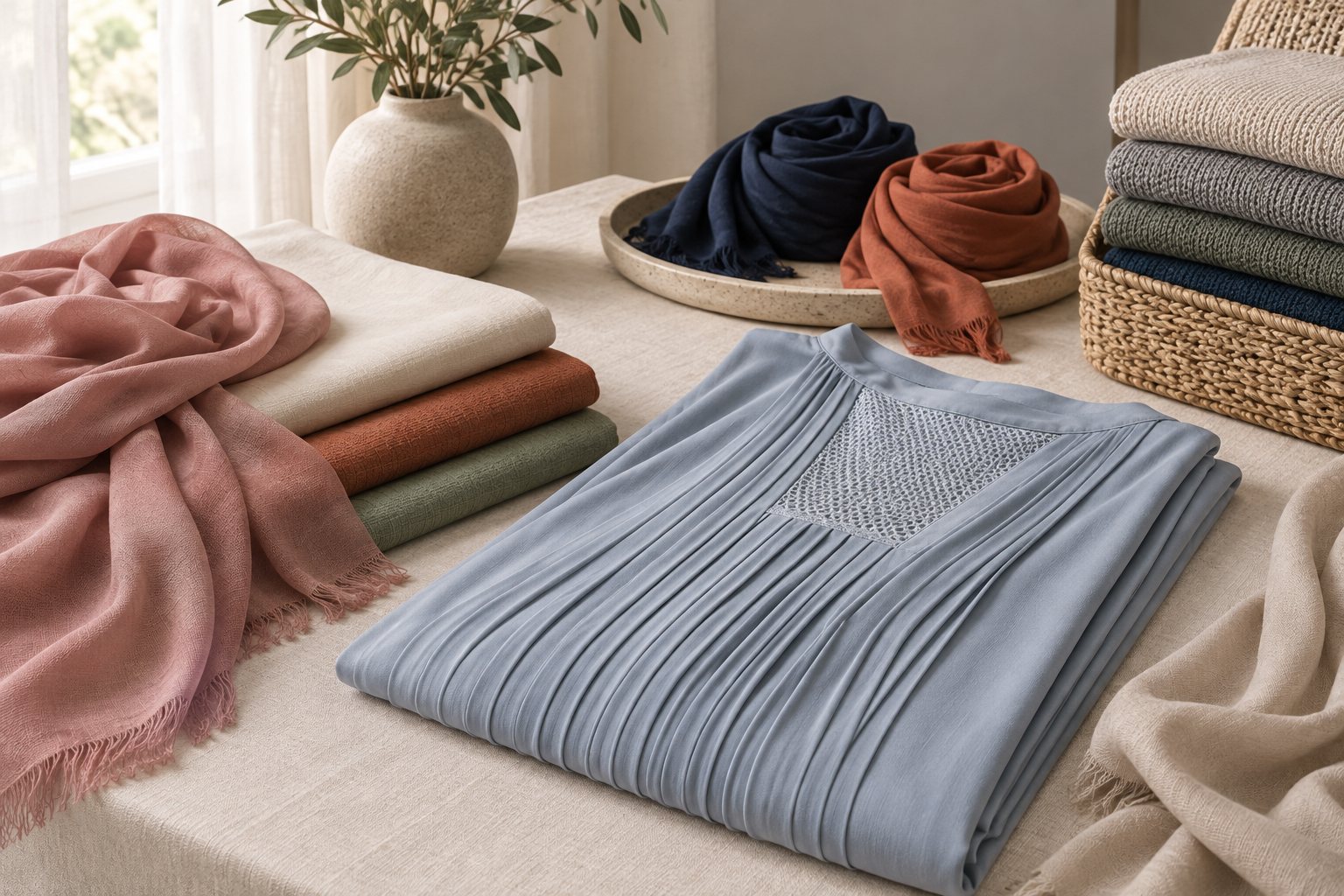
The mesh panel at the eyes is the most important detail. It is usually a separate piece of open-weave or embroidered mesh set into the face section. Its size, position, the openness of the mesh and the way it is joined to the surrounding fabric all affect visibility and comfort. Embroidered borders around the panel are common. On a sample, we check that the panel lines up with eye level when the cap sits correctly and that the joining seams lie flat.
Pleating
Fine pleats running down from the cap give the garment its shape and movement. Pleating is done after cutting, and pleat width and the way pleats are set affect both how the garment falls and how it survives washing. Pleat retention should be checked after a wash test on the bulk fabric.
Length
Length is usually stated as front and back length from the cap. Different regional styles fall to different points, and the back is often longer than the front. We write both on the spec sheet and check them on the sample.
Fabrics
The full-length form uses a lot of fabric, so weight and breathability matter. Light polyester and crepe are common because they pleat well and hold pleats. Nida, the matte woven crepe used for niqabs and khimars, appears in combined sets. Fabric weight is confirmed on the spec sheet for each program rather than published as a fixed figure. If the garment is meant for hot climates, say so in the brief.
Colors
Color conventions differ by region. Some regional forms are commonly seen in blue, others in black, white or muted tones. Rather than assume, build the palette from your own customers' requests. Each color is a separate dye lot with its own minimum. A dark shade on a light, pleated fabric also needs a check for colorfastness, because pleated garments are handled and folded often and any rub-off shows quickly on lighter clothing worn underneath.
Sourcing notes
Full-length burqas with pleating and mesh panels are a specialist sewing job, and fewer workshops run them than run hijabs or niqabs. We route these programs to partner workshops in the cluster that already sew pleated and panelled garments, and we sample before quoting bulk. Combined sets are closer to khimar and niqab production and can often be made alongside those styles in matching fabric.
Minimums depend on the form and the fabric. Stock colors in standard styles typically start from about 50-100 pieces per color and style; custom colors typically sit higher, often set by the dye lot. Custom samples took about 7 working days in published examples and can take up to around two weeks for new colors; a pleated, panelled garment may need a second sample round. All figures are confirmed in writing for each program; see MOQ and lead time.
Labels follow US textile rules: fiber content, country of origin and the manufacturer or dealer identity. Light fabrics deserve a flammability check, as with any clothing textile; see compliance. Our post what is a burqa covers the term and its regional uses in more depth.