
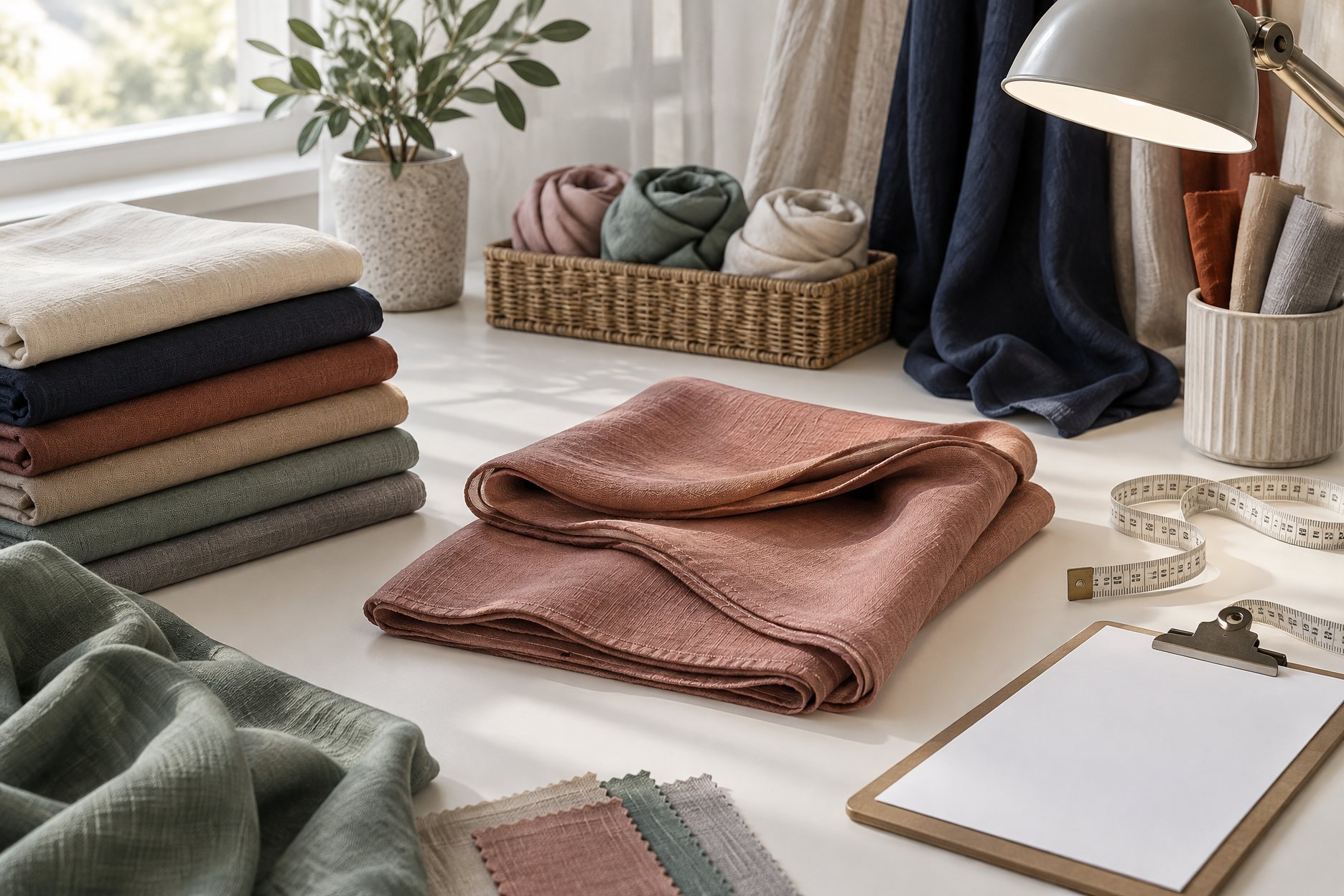
What goes wrong with hijabs
Hijab defects are usually small and easy to miss in a single piece, but they add up in a shipment. A pinhole in jersey becomes a ladder after the first wear. A rolled hem that waves on one side makes a chiffon scarf look cheap when it falls at the face. A navy that is slightly greener than last season sits badly next to old stock on the same shelf. A label that says the wrong fiber percentage creates a compliance problem. Customers notice these things, and they write about them in reviews.
The answer is not to inspect harder at the end. It is to define, before production, what the approved product looks like and what counts as a defect, then check at the stages where each defect is created.
The inspection points we check
| Point | What we look for | Checked against |
|---|---|---|
| Holes and fabric faults | Pinholes, dropped stitches in knits, snags, slubs, stains, weak spots | Fabric standard on the spec sheet |
| Shade | Color within the agreed tolerance, consistent across pieces and cartons | Approved lab dip or stock color card, under agreed light |
| Print alignment | Pattern placement, border position after hemming, registration, missing color | Approved strike-off and placement drawing |
| Edge finish | Even stitch, no waving or puckering, no skipped stitches or loose threads | Approved sample and named edge finish |
| Measurements | Length, width, square size, face opening, cap circumference, back length | Measurement chart and tolerance on the spec sheet |
| Label content | Fiber content, country of origin, care, RN or company name, position | Approved label artwork |
| Packing | Fold size, polybag, hang tag, gift box, carton marks and counts | Packing specification |
When inspection happens
- Before production. Fabric and trims are checked on arrival: fabric type and handle against the approved swatch, shade of the bulk lot against the lab dip, label and tag proofs against the artwork.
- During production. Early pieces from cutting, edge finishing and sewing are checked so a problem with a pattern, a hem setting or a print screen is caught before it repeats across the run.
- Final inspection. When goods are finished and mostly packed, a random sample is drawn from the cartons and inspected against every point above, including counts and carton marks.
Each inspection ends with a written report that lists what was checked, what was found and the photos taken. If a result is outside what was agreed, we tell you the options before anything ships: rework, replacement, sorting, or acceptance with your written consent.
AQL sampling in plain terms
Final inspection rarely checks every piece. Instead it uses acceptance sampling, usually described by an AQL, or acceptance quality limit. In simple terms, the shipment size decides how many pieces are drawn at random, and the agreed AQL decides how many defective pieces can be found in that sample before the lot is rejected. Defects are sorted into classes, typically critical, major and minor, and each class has its own acceptance level.
A few points make AQL useful rather than a formality:
- Agree the levels in writing. The AQL for major and minor defects, and whether any critical defect is acceptable, are written into the program before production.
- Define the defect list. A wavy hem may be minor on a casual jersey scarf and major on an evening satin line. The list is specific to your product.
- Sample across cartons. Pieces are drawn from many cartons and colors, not from the top of one box.
- Treat it as a sample, not a promise. Passing an AQL inspection means the sample met the agreed level. It reduces risk; it does not make every piece perfect.
Shade: the most common dispute
Shade causes more disagreement than any other point, because color looks different under shop lighting, daylight and a phone screen. We check shade against the physical approved lab dip, not a screen image, under an agreed light source. For programs that reorder the same colors, each new dye lot is compared with the original approval as well as the previous lot, so colors do not creep over time. Read color matching and shade for how references are chosen.
Lab tests are separate from inspection
Inspection checks workmanship. It does not replace laboratory tests such as flammability for light fabrics, colorfastness, shrinkage or the children's product tests that apply to kids' styles. Those are planned with an accredited lab where your market or your own standards call for them. The compliance page explains which rules commonly apply to hijab imports, and we help plan which tests to run and when.
Third-party inspection
Some buyers want an independent inspector in addition to the desk. That is optional and welcome. You can book your own inspection company, or ask us to arrange one, and the inspector works from the same spec sheet, defect list and AQL levels. We make the goods and documents available on the agreed date and share our own reports for comparison. For confirmed programs a factory audit can also be arranged through the sourcing network.
What you can do to help
The clearer the approved sample, the better the inspection. Keep a sealed approved sample on your side, and we keep its twin with the workshop. Write down anything that matters to you that a stranger might not notice: the side the label sits on, how the fold should look, the exact border width on a printed square. Inspection time is planned into the schedule confirmed in writing for each program, shown on the MOQ and lead time page, and the sample request form lets you note any inspection requirements from the start.