
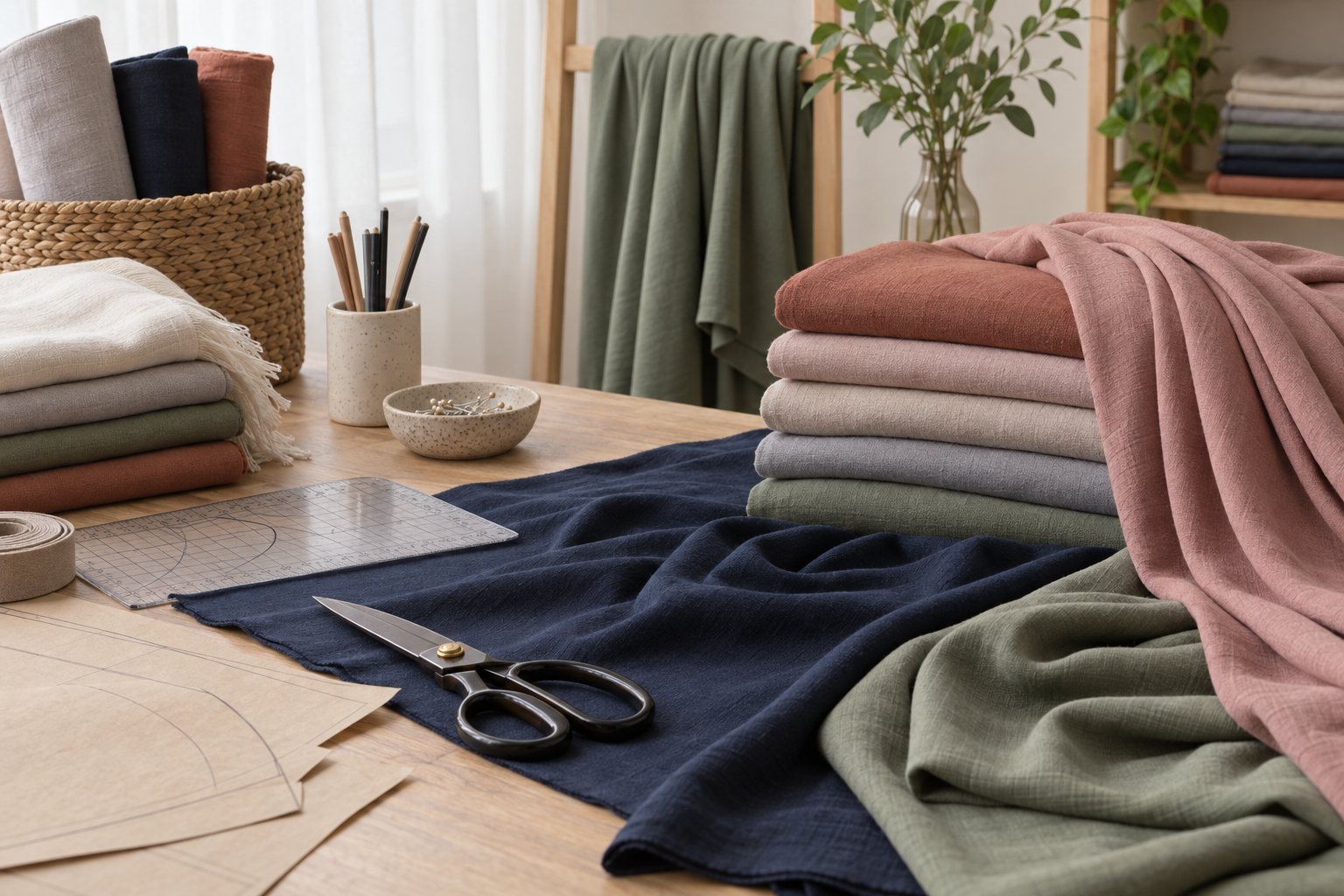
Why the process matters to a buyer
Most problems in a hijab order are decided early. A shade that drifts between colors was set at dyeing. A rolled hem that waves was set at cutting and fabric choice. A label missing fiber content was set when nobody wrote the content down. By the time cartons are packed, fixing any of these means re-making goods. Understanding the sequence lets you put each decision where it belongs and approve it before the next step builds on it.
The steps below describe how partner workshops in the Yiwu cluster usually run a program. Not every program uses every step: a stock-color jersey rectangle skips lab dips and printing, while a printed modal square skips sewing. The spec sheet lists the steps that apply to yours.
The sequence at a glance
| Step | What happens | Buyer decision or approval |
|---|---|---|
| 1. Fabric sourcing | Knit or woven base fabric (greige) is sourced or produced | Fabric type, composition, weight confirmed on the spec sheet |
| 2. Color or print | Dyeing to a color reference, or digital or screen printing | Lab dip or strike-off approval |
| 3. Cutting | Fabric is spread and cut to size or pattern | Finished size and tolerance |
| 4. Edge finishing | Overlock, rolled or baby hem, pressed hem, or laser cut on some knits | Edge finish named in writing |
| 5. Sewing | Instant styles, caps, khimars and niqabs are sewn with elastic, ties or snaps | Sewn sample approval, measurements |
| 6. Inspection | Holes, shade, print alignment, edge finish, measurements | Inspection plan and acceptance level |
| 7. Pressing and folding | Pieces are pressed and folded to the agreed fold size | Fold size and presentation |
| 8. Labeling | Fiber content, country of origin, care, RN or company name | Label content and position |
| 9. Packing | Polybags, hang tags, gift boxes, carton marks | Packing specification and carton labels |
Fabric sourcing
Every program starts with base fabric. Jersey is knitted on circular machines; chiffon, voile and satin are woven. Mills and workshops in the cluster hold common fabrics in greige or ready-dyed form, and less common ones are ordered for the program. The spec sheet names the fiber and composition, the construction and the weight, which is confirmed on the spec sheet rather than assumed from a fabric name. Two fabrics both sold as chiffon can differ a great deal in opacity and handle, so the approved fabric swatch is kept as the reference. Compare the families on the fabric guide.
Color: lab dips for custom shades
Stock colors are dyed already; you choose from the workshop's color card. For a custom color, the dye house matches your reference, often a physical swatch or a color standard number, and sends small dyed samples called lab dips. You approve one, and bulk is dyed to that approval. Shade varies slightly between dye lots, so for programs where matching across reorders matters we keep the approved lab dip on file and check each lot against it. Matching across different fabrics, such as a jersey underscarf and a chiffon rectangle, is planned as a pair. Read more in sampling, lab dips and strike-offs.
Print: digital or screen
Printed programs replace dyeing with printing. Digital printing suits small runs and designs with many colors; screen printing suits larger runs of designs with fewer colors. Either way, a strike-off on the production fabric comes before bulk. Print placement on a square or rectangle is checked against the cut size, so borders sit evenly after hemming. Details are on custom printed hijabs.
Cutting and edge finishing
Fabric is spread in layers and cut to the finished size plus hem allowance. Slippery wovens such as chiffon and satin need careful spreading to stay square. Then comes the edge, which shapes how the scarf looks where it frames the face and falls over the shoulder.
- Overlock: durable and quick, common on jersey and everyday wovens.
- Rolled or baby hem: a fine, light edge for chiffon, voile and satin.
- Pressed hem: a folded and stitched edge suited to crisp cotton.
- Laser cut: a flat, unstitched edge on some knits, confirmed per fabric.
Sewing shaped styles
Instant hijabs, underscarves and caps, al-amira, khimars and niqabs need sewing beyond the edge. Elastic is set at the face opening or back, ties or snaps are attached, and layers are joined. These styles carry measurements such as face opening, cap circumference and back length, so a sewn sample is approved and its measurements written down before bulk. Ties and snaps on kids' styles raise separate safety questions, planned at the spec stage.
Inspection, pressing and labeling
Inspection checks finished pieces for holes, shade against the approved lab dip, print alignment, edge finish and measurements. It runs during production and again on finished goods; see quality control. Pieces are then pressed and folded to the agreed size, which matters for packaging and for how the range looks on a shelf or in a product photo. Labels carry fiber content by generic name and percentage, country of origin, care instructions and the RN or company name, as the program's market requires.
Packing and shipment
Packing follows the spec sheet: single polybags, hang tags, gift boxes for sets, and cartons marked with style, color, quantity and destination details. Mixed cartons are avoided unless agreed, because they slow receiving. A packing list matched to carton marks goes with every shipment.
How long it takes
Stock samples ship in days. Custom samples take about seven working days in published examples, up to around two weeks for new prints or colors. Bulk typically takes about 25 to 35 days after sample approval, and longer in the busy weeks before Ramadan and Eid. These are typical reference ranges, confirmed in writing for each program; the MOQ and lead time page shows how fabric and print change them.